
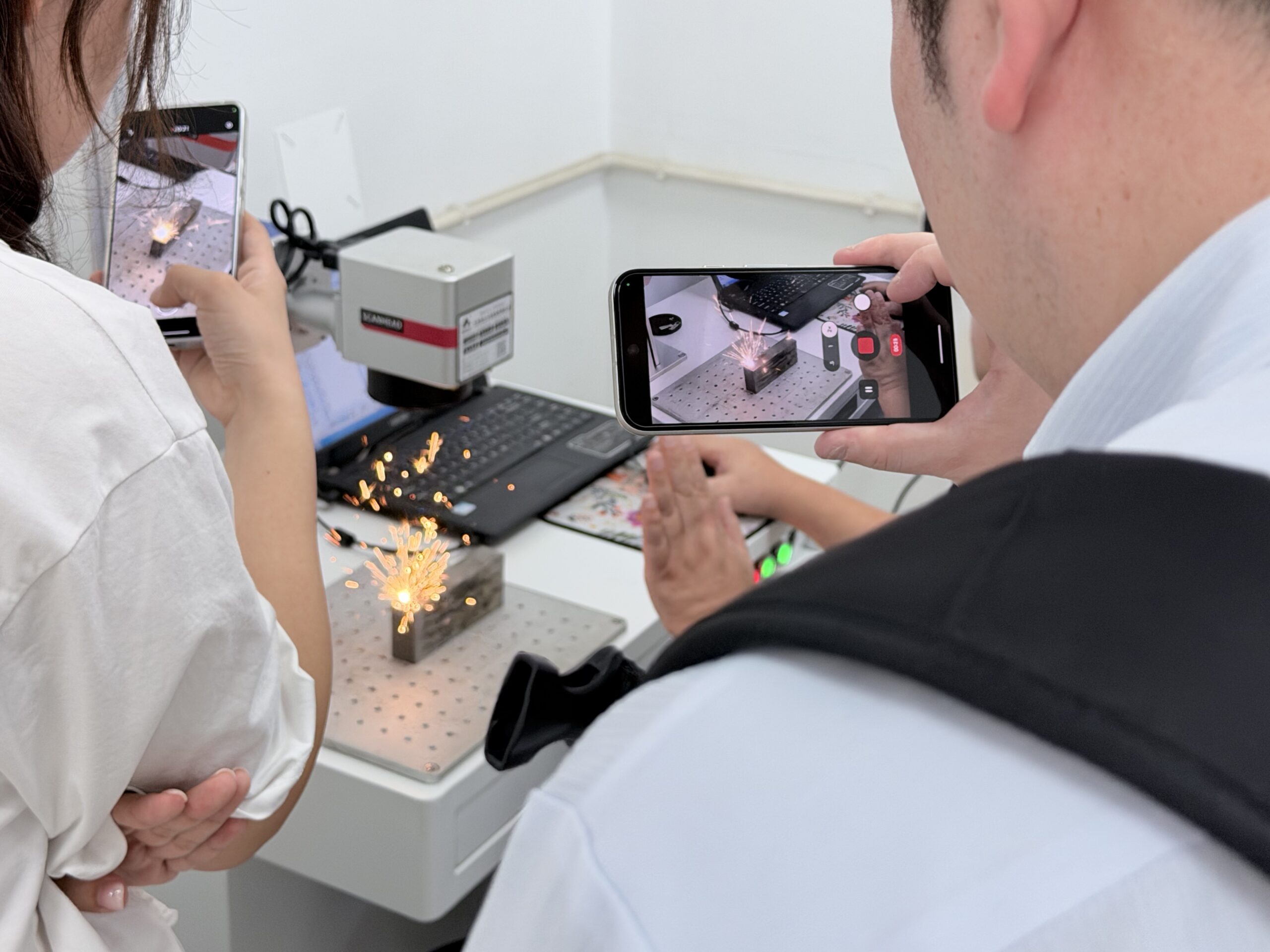
In industrial production, cleaning is a step you simply can’t avoid. Mechanical grinding, chemical baths, dry ice blasting… These traditional methods solve part of the problem, but they commonly suffer from limited flexibility, hard-to-treat waste, and a real risk of damaging the base material. With its efficiency, environmental friendliness, and non-contact process, laser cleaning is becoming the new choice for a growing number of factories.
But when you open the spec sheet of a laser cleaning machine, you’ll hit an unavoidable fork in the road: single-mode or multi-mode?
Single-mode and multi-mode are the two most common types of pulsed fiber lasers, and they are the deciding factors behind “will it clean thoroughly” and “will it damage the part.” What exactly sets them apart, and which job is each one built for? This article explains it all in one read.
01 What Are Single-Mode and Multi-Mode?
The “mode” of a laser describes how energy is distributed across the beam’s cross-section, perpendicular to the direction of travel. By distribution shape, lasers fall into two camps: single-mode and multi-mode.
- Single-Mode: A Clean Gaussian Beam
The laser outputs a single mode. Energy decreases gradually from the center toward the edge, and the beam profile is a Gaussian curve—high in the middle, low at both sides. This is the classic “fundamental-mode Gaussian beam.” It offers high beam quality, a small spot diameter, and a low divergence angle. After focusing, the spot is tiny and the focal point is stable. Energy is highly concentrated—it’s born for “aggressive removal.”
- Multi-Mode: An Even, Flat-Top Beam
The laser outputs a single mode. Energy decreases gradually from the center toward the edge, and the beam profile is a Gaussian curve—high in the middle, low at both sides. This is the classic “fundamental-mode Gaussian beam.” It offers high beam quality, a small spot diameter, and a low divergence angle. After focusing, the spot is tiny and the focal point is stable. Energy is highly concentrated—it’s born for “aggressive removal.”
The One-Sentence Summary: Single-mode is like a sharp blade—energy concentrated, capable of biting into the toughest contamination. Multi-mode is like a wide plank—energy spread evenly, sweeping large areas flat.
02 Pros and Cons of Each
Single-Mode: Strong Removal, But Handle with Care
Strengths — Excellent beam quality, small focused spot, high energy density. It removes strongly adhered contaminants—rust, oxide layers, coatings—noticeably better; low heat input means minimal distortion on thin sheets and precision parts.
Limites — The energy is so concentrated that improper parameter settings can leave marks on the base material—or even damage it.
Multi-Mode: Even Energy, With the “Threshold” Held in the Middle
Strengths — Uniform energy distribution and high peak power. It lets you hold the peak power density inside a narrow window: above the damage threshold of the contaminant, below the damage threshold of the base material. The contamination layer is knocked off while the parent material stays untouched. And with a larger spot, efficiency is usually higher in applications where it can achieve the same cleaning result.
Limites — Against strongly adhered contaminants, it often falls short.
This is exactly why applications like mold cleaning—where “the mold surface must not be damaged”—almost always go multi-mode: the flat-top beam strips away residue without destroying the mold’s microstructure.
03 Which Applications Suit Which?
Single-Mode: Hard Tasks at the “Point”
- Metal rust removal — High energy density strikes directly at the rust layer. The higher the power, the more thorough and efficient the derusting; a routine choice for refurbishing hot-rolled plate and carbon steel parts.
- Weld seam oxide cleaning — Removing oxides and precipitates from weld seams and heat-affected zones, before and after welding, directly determines subsequent coating adhesion and seam appearance.
- Precision component cleaning — Low heat output, low distortion; ideal for thin-walled parts, precision components, and localized fine decontamination.
Multi-Mode: Even Work Across the “Surface”
- Mold cleaning — Release-agent residue, carbon deposits, and plastic remnants on tire molds and injection molds. The flat-top beam sweeps across, removing residue without harming the mold surface or shortening mold life.
- Large-area paint and heavy rust removal — Wide scan lines; one pass covers a whole strip. Suited to high-volume workpieces and the overall refurbishment of large structures.
- Laser texturing — Uses high single-pulse energy to create uniform micro-dimples on surfaces, improving coating adhesion and friction performance, balancing efficiency with roughness control.
- Thin-film battery edge clearing — Removes the film layer along cell edges to create an insulation zone; the square spot shapes it in one pass without damaging the glass—a refined application that has emerged in recent years.
04 How to Choose — The Key Comparisons
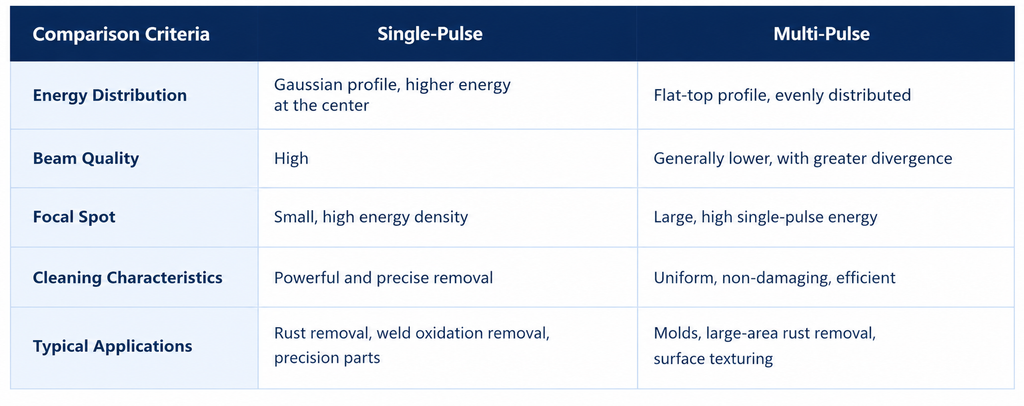
Choose single-mode when: you’re working on precision parts or strongly adhered contaminants (metal oxide layers, coatings) and you need precise, powerful cleaning.
Choose multi-mode when: the area is large and base-material damage is a strict no-go (molds, rust stains, oil films, thin coatings) and you need efficiency without harm.
KUNTAI LASER — Pulsed Laser Cleaning Machines: Two form factors, covering two working conditions: “on the move at the site” and “stationed in the workshop”
KT-HLC Air-Cooled Handheld Laser Cleaning Machine
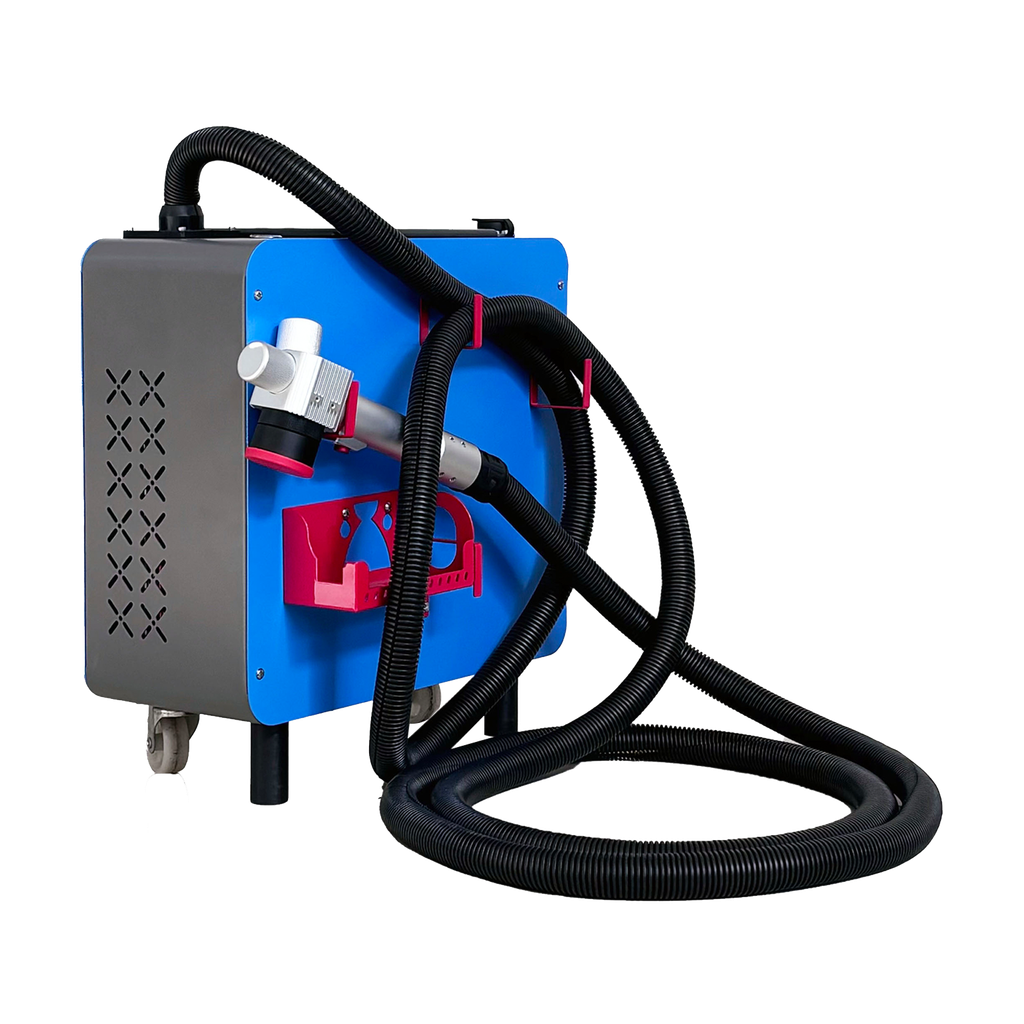
Trolley-style design, compact footprint, air-cooled with no water chiller required—push it into position and start working. Ideal for beside the production line, outdoors at height, and on-site cleaning of large structures. One hand on the gun is all it takes; virtually maintenance-free in daily use.
Pulsed Laser Cleaning Machine — Trolley-Case / Cabinet Type
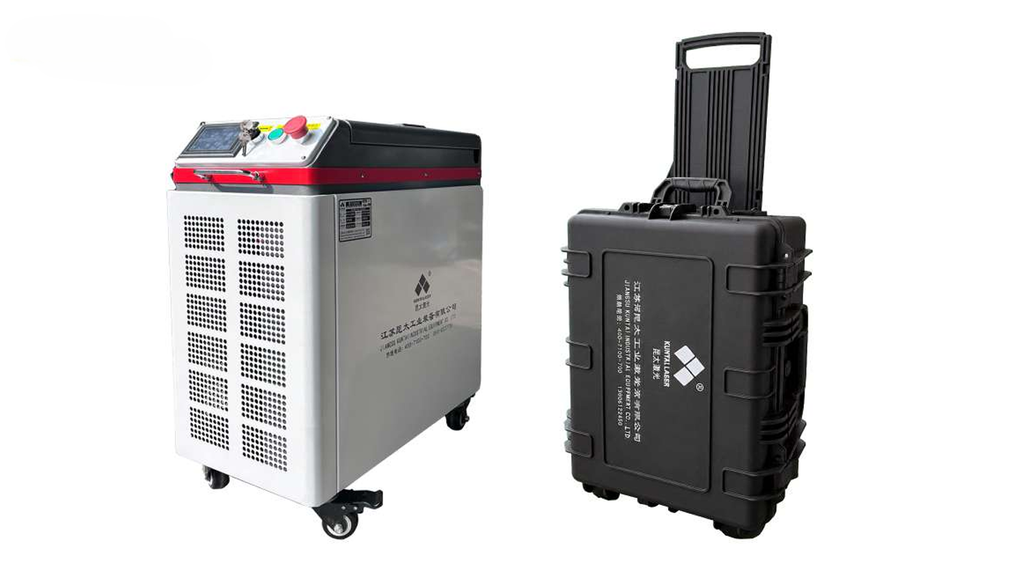
A compact, lightweight all-in-one cabinet with 9 built-in dedicated cleaning modes. Switch parameters freely according to the base material and degree of contamination. Ideal for fixed stations in the workshop, heavy contamination, and efficient large-area cleaning.


 French
 English
 Spanish
 Portuguese
 Arabic
 Russian
 Chinese